


CPPE director Matthew Shaw on how postgraduate education is changing
Arthur Walsh,
09 Jan 2026 1 Min
1 Min

Arthur Walsh,
09 Jan 20261 Min
Arthur Walsh,
09 Jan 20261 Min


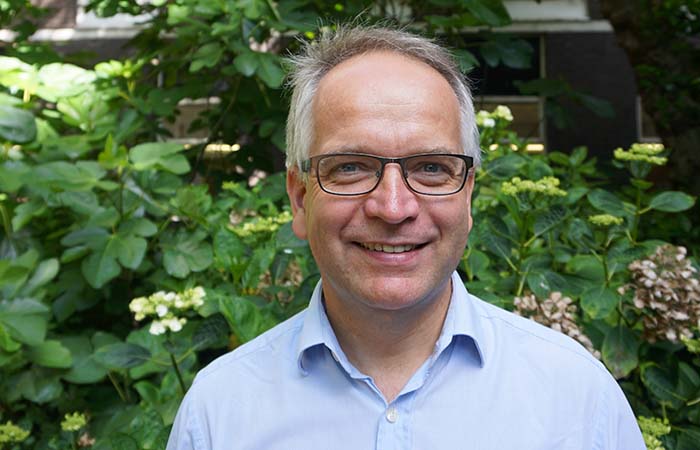
The Centre for Pharmacy Postgraduate Education (CPPE) has a long history at the University of Manchester. Having first begun as a partnership with the Regional Health Authority (RHA) for the North West England district, it became a full part of the university with the abolition of RHAs in 1995 and over the 30 years since has become firmly established at UoM.
However, all that could be about to change.NHS England (NHSE) is conducting the first fully open procurement exercise since 1991 – there have been various reviews and extensions in the intervening 34 years – meaning the centre could move elsewhere in England.
Not only that, CPPE director Matthew Shaw tells me, but the NHS is also reducing funding for postgraduate training by a third from its current base (CPPE received £15.2m in funding in the year to April).
“The total offer over five years is just under £50m,” says Shaw, a community pharmacist by training who has been director since 2017 and spent over a decade as deputy director before that. “For the first two years it’s £10.1m, then it drops down to around £9m for the three years afterward. Inflation will go up as the amount offered goes down; it’s going to get increasingly difficult.
“The difference in funding is really huge at a time when the profession is growing and pharmacists are coming out as prescribers. Arguably, we need more support.”
When we spoke in late November 2025, he was still awaiting the outcome of the tender exercise, with a decision expected this February.
It sounds like NHSE is anticipating a slimmed down programme and less intensive offering, I suggest. Shaw acknowledges that numbers coming through the Primary Care Pharmacy Education (PCPE), an 18-month programme (15 months for pharmacy technicians) offering one-on-one support from three mentors, are much lower. “At the peak, we had 2,500 learners per year – realistically now it should be 800-900,” he says. As a result “It will be less funding per head that’s available.”
But he argues that as Health Secretary Wes Streeting remoulds the health service, pharmacists and pharmacy technicians will still need help in navigating a changed system. “We need to think what the impact of neighbourhoods will be. As we have a new health system put in place there will be different ways for pharmacist to work – what support will they need?”
The three-supervisor model “has been very good but clearly there’s a cost with that… that isn’t something that can carry on”. If Shaw’s team win the contract back, there will still be difficult talks around redundancies. “Clearly you need a smaller staff to support 900 people than 2,500. The number has dropped each year. We were hoping to manage that decline, whereas the approach NHSE has taken is basically a cliff edge. I don’t think anybody wants to get to that position.”
Has he engaged with staff about their future? “I’ve been trying to make sure my whole team knew what was happening and how it was happening from the start. I’ve been talking with the team for many months about the direction we’ll be going in.”
A consultation is underway “and we’re trying to work with the whole team on building the selection criteria and making it as fair as possible”. If CPPE continues in its current form, staff from the primary care pathway will be redeployed to other workstreams to avoid that ‘cliff edge’ drop. Shaw says: “If you were to do it proportionally that’d be over half the team going, which I think would have just been a nightmare.”
Nonetheless, job losses will be “significant”. He says: “I don’t know what the outcome will be at this point – it would be quite wrong of me to try to prejudge that.”
What do they plan to do if they win the tender? “It’s hard – we are the go-to place for so many things,” Shaw replies before saying: “The idea isn’t exactly to go back to basics, but it would be going right back to asking what do we need to do to help community pharmacy demonstrate their place and to raise standards across the profession?”
A key ambition would be to continue hosting face-to-face events in order to build networks, something doubly important for community pharmacists whose role “can be an isolated, lonely one”.
Pharmacists aren’t coming to CPPE because they have to “but because they want to”. He adds: “We’re giving them the learning they need in the way they need it – not wasting their time and effort.”
The central goal is giving pharmacists the confidence to use their clinical skills, he says as he highlights CPPE’s pedigree. “Some of the work we’ve done in the past has meant pharmacists were trusted to offer services,” he says, explaining that CPPE training on emergency contraception “helped persuade the government to commission that service”.
He has another ambition: “I’d love it if we were the education provider of choice for the Royal College [when it launches in April] rather than them deciding they need to recreate everything we’re doing and charge the membership for it.”
As demand for CPPE subsides, where does he see the need for postgraduate training now? “First of all, I wouldn’t say there’s less demand for CPPE. The learners on that pathway continue to find it completely meets their needs. And GPs and commissioners are still saying this is the pathway we need people to do. It’s just that there are fewer people moving into these roles.
“But what we can start to see as we look to the future is that community pharmacists need to be picking up on some of those roles we’ve seen our primary care colleagues taking. We’re seeing that there’s a greater intention for Pharmacy First to expand. As that happens, it requires pharmacists to think in a different way.
“We’ve got this situation where we’ve got a definite need but a group of people where there isn’t necessarily, at the moment, that learning provision.”
To Shaw, the success of Pharmacy First presents “an opportunity to explore what more we can do… Rather than just waiting for pharmacists to turn up at a workshop, we can take the learning to them”.
He started at CPPE as a local tutor. How have the training needs of community pharmacists changed since those days? He says when he was a community pharmacist patients would come to him and say, “You’re as good as a doctor, aren’t you? But we weren’t. We could talk to them but we had a limited arsenal of effective medicines that we could use and made decisions based on very limited information”.
The difference now is “we’ve got access to a whole load of medicines,” he says. I ask if this means the community sector will catch up to hospital and general practice in terms of role scope. He replies: “It’s a different need. My wife’s a hospital pharmacist and I was a community pharmacist, we’ve long recognised that we’ve got a very different skill set.”
There’s no reason we should have to be the same, he argues. “A GP is different to a renal specialist and there’s no problem there.”
Where there is room for improvement is in community-based independent prescribers (IPs) recognising one another’s expertise. “If someone comes in with a respiratory or renal problem, I should know which of my pharmacist colleagues to ring up for advice. We don’t have that professional network, or the expectation of helping each other out.”
With prescribing, will that network of specialists develop? “I think so. It’s really hard to be a generalist,” he replies. “For years we’ve had GPs with special interests. Having a pharmacist with an interest in dermatology, for example, would make sense.”
Pharmacists also have the reputation of being fairly self-contained, he says: “I think we’re just scared of somebody telling us we got it wrong.”
But he is quick to sing the sector’s praises: “We’re told every year the drugs budget is going up because more and more people are being treated with medicines. The workload pressure on pharmacy teams to meet that need while offering all these other services is absolutely immense. The fact they have managed that without cracking is hugely impressive.”
One area where support is needed is in moving away from a patient group direction (PGD)-based modality, he says: “A PGD allows you to make a supply, but it doesn’t use the skillset of pharmacists. I think they should be doing so much more. What can we do to help people feel confident in getting to that position?”
He says CPPE would like to help pharmacists get to that point, commenting: “When funding was first made available for community pharmacists to take on the IP qualification, they found it quite hard to persuade the pharmacists to go back to university to do it – to believe they could.”
He says the trainee pharmacists he has spoken to are “nervous” about prescribing: “They’re trying to work out what it is going to mean.” Particularly for those working in community pharmacy, there’s a pressure that they might be asked to do more than they feel safe doing, or more than they feel they can do.
“The pressure on pharmacists is massive,” says Shaw. “One of my friends is a pharmacist prescriber. His company said we expect you to do 69 prescriptions an hour – one minute per script. We shouldn’t be in a position where that’s expected of us.”
And with private prescribing increasingly common – weight loss services are helping many pharmacies subsidise their NHS work, he says – CPPE can’t focus solely on commissioned services.
Shaw says that in the organisation’s workshop on private weight loss services, “we’ve tried to say that just because it’s private doesn’t mean you shouldn’t have NHS-quality thinking going into it. It’s focused on safe prescribing and trying to get people to think through the grey areas.” Pharmacists like clear cut answers and prescribing will force them to deal with complex situations, he says.
“Active thinking is the most important thing with prescribing. You should know why you’ve made every decision, not just signing things off because it’s simple. That’s the real thing to get out over the next five years.”
He says of CPPE’s programme for prospective IPs: “We wrote the programme specifically to say that when you’re working as a community pharmacist you’re actually developing all of these skills, all the time. You’re using your clinical judgement, you’re listening to people, you’re actively engaging in consultations. This is why you should go and do the prescribing.”
Another challenge to work through is that the pathfinder sites seem to “really work in deprived areas… If an NHS-funded service works in a deprived area, the way to grow it to begin with is through a private service, which is not going to be in a deprived area.”
Is it harder for pharmacists not employed by the NHS to envision themselves as prescribers? “I think so. If you think of a hospital pharmacist, they work as part of a team. If they’re not sure about something, they can bounce ideas from colleagues on the ward. But when I was a community pharmacist, there was me and my counter staff. You can’t have that kind of decision-making conversation with somebody who isn’t at that same level and doesn’t understand it.”
He thinks this will be an “increasingly serious issue” for pharmacists, and a main inspiration for a series of workshops facilitating face-to-face conversations between pharmacists “to try to create those trusted peer networks”.
“Instead of seeing the nearest pharmacist to you as your biggest competitor, we need to switch the mindset so instead they are someone you can talk things through with and gain support from.”
The role of pharmacy technicians is growing, but Shaw believes it has yet to be fully agreed what they’ll be doing. “Will it be marking IP pharmacists’ homework? I’m not sure it will. One of the challenges we come up against time and again is this belief, almost, that a pharmacy technician is a wannabe pharmacist. We need to find a way to describe what our roles are.”
He believes pharmacists’ unique claim is being “the experts in the clinical aspects of medicines” and that the technician’s professional claim is different. “Maybe it sounds like I’m limiting them, but what we’re increasingly seeing is that the focus should be on dispensing – excellence in making sure the product goes out properly in a way somebody trusts.”
“It’s what pharmacists have done for years. It’s like we’re handing over that part, but not the expertise in medicines and how they work.”
“We need to start to tease that out,” he says, arguing that developing new roles for community pharmacy teams demands a consistent level of formal training that doesn’t always apply.
Hospital pharmacy technicians have seen their role come on in leaps and bounds due to the support structures, “but sometimes the problem in community pharmacy is pharmacy technicians don’t feel they’ve got a job that’s worth doing. Our research shows that where they feel they’re valued and have a purpose, they love the job”.
Giving them autonomy and trusting them to get on with the job is vital, he says, “rather than just being told to go and count tablets”.


